
Julia Lakey - Native Plants

How one islander plants to support local pollinators
By Tess Halpern For The Beachcomber • January 20, 2026 10:30 am


Asters with pollinators

Asters blushing pink against the misty dusk, crimson-colored huckleberry stems laden with unopened buds, a clump of weedy salvia. As Julia Lakey gently trails her fingers across the tops of each plant in her garden, she decides which will be ready to propagate come spring.
She knows by heart the name of each purple bloom and half-dead cluster of leaves she brushes past, yet she is self-taught. “I’m not a trained naturalist,” she said. “I’m just a boots-on-the-ground naturalist.”
Lakey has lived on Vashon for the past half-century, though she has worked all over the country as an educator and writer. Her hands-on approach as a gardener has served her well for past projects, such as working to certify the island as a wildlife habitat community in 2020 and installing a pollinator garden at Matsuda Farms.
Her newest project is planting pollinator gardens around all of Sunrise Ridge’s major buildings, a project she has taken on solo.
“I really want to work on rewilding and helping native plants and native creatures,” she said.
The gardens are diverse, beautiful and self-proliferating. They’re also carefully curated to benefit Vashon’s pollinators, which include specific birds, bees, butterflies, wasps, or even flies.
Pollinators need pollen as a food source in order to survive, which Lakey said becomes a challenge when many plants aren’t blooming in the colder months.
The key to a pollinator garden is accessible pollen, all season long. This is important, Lakey said, “because the pollinators need food, and they hatch out at different times, and if they’re denied food then they might never complete their life cycle.”
Yet, not all pollinators are a force for good, according to Lakey.
Tourists marvel at 'absolutely amazing' partially frozen Niagara Falls
Some non-native pollinators can threaten the well-being of other pollinator populations. “We have a lot of honeybees [on Vashon] and there is some research that shows that honeybees compete with the natives,” Lakey said. “We’re driving down the native species with our focus on honeybees.”
For native bees, this type of competition can lead to hive disasters like mites or colony collapse. “We have more than 30% of [Vashon’s] hives die out completely over the winter and that wasn’t true decades ago,” Lakey said.
Many pollinator populations in this area are suffering, and it’s partially due to what people are planting, Lakey said. She added that people on Vashon tend to be attracted to planting “exotic” species in their yards, which are not native to this area.
These non-native plants don’t have enough pollen for pollinators to use, nor are they good habitats for native insects. “So essentially, we’re planting green deserts for the native creatures,” she said.
The solution, however, is more complicated than simply replacing all non-native plants with native ones, Lakey said.
There is a fine balance between emphasizing native plants and having enough pollinators. If there are too many non-native plants, native insects won’t have pollen all season long, she said. If there are too few, habitats for pollinators become limited.
Lakey’s golden ratio? “The recommendation is to make your yard 70 to 80% native plants,” she said.
In her Sunrise Ridge gardens, native plants include salvia, huckleberry, manzanita and asters, among many others. “My new favorite late-season thing is asters, because they come in so many colors,” she said. “Blues and purples and talls and short, chubby ones.”
Lakey also emphasized that helping local species sometimes must fall on landowners, who have more space to plant. A prime example, she said, is the Garry oak tree, a Northwest native that serves as a habitat for over 200 species of insect.
“The Garry oak [is a] massive oak tree that takes a lot of room,,” she said. “It takes a homeowner with enough land to do that.”
Lakey urged people to consider more than just looks when planting trees near their homes.
“I don’t think people very often think about planting a tree based on who is going to benefit,” she said. “They just think of the aesthetics, about how it’s going to fill the space.”
To those with adequate yard space, Lakey also recommends planting the native Oregon white oak tree.
Lakey has lived a life of many chapters. She worked with Deaf children in Kansas before moving to Vashon in 1976. She helped create English as a Second Language (ESL) curricula in Seattle, worked with refugees in the Tacoma area, then became a high school special education teacher in Gig Harbor.
“I did teacher training, I wrote books. I got to do everything I wanted to do,” she said.
After years spent watering curious young minds and ensuring they had the right tools to grow, traveling all over the Pacific Northwest to serve as an advocate for others, Lakey retired and began thinking about the impact she wanted to make on her home.
“Once you’re [at] retirement age, you start thinking about your legacy,” she said.
Lakey began to ask herself, “How could I help rewild and re-naturalize a place on the planet that I love so deeply, Vashon Island?”
From her earliest moments, Lakey has always loved gardening. Growing up in the San Fernando Valley, she was the first in her family to start a vegetable garden. As she grew, she carried with her the importance of staying connected to the land.
“Any place I’ve lived, I’ve planted some kind of food or flowers around me to enjoy the seasons,” she said.
Lakey’s formal introduction to naturalism came from the National Wildlife Federation, which she said provided excellent resources as she worked to certify Vashon as a wildlife habitat community in 2018.
Then, in a cooperative project with the Land Trust and Matsuda Farms, she installed her first pollinator garden in 2020.
Along with an enthusiastic group of volunteers from the Garden Club, Lakey began the planting process with some native seedlings she bought from a local grower.
“We had a planting party,” she said.
With this first garden plot, which Lakey said measured three feet in width and over 200 feet in length, she learned the value of a self-propagating garden, a technique she would go on to use at Sunrise Ridge.
After a few years of growth, Lakey said, the garden begins to plant itself as flowers drop seeds into the soil below. “You end up having a wonderful carpet of the plants that you want,” she said.
Lakey has since stepped back from the Matsuda farms pollinator garden, appointing a new coordinator. The space is also a time of transition, since the Land Trust has recently leased the farm to new tenants.
The Sunrise Ridge board, drawn by Lakey’s new reputation for pollinator garden knowledge, approached her in 2022 and asked her to redo the small garden outside Sea Mar Clinic. She transformed the space into a vibrant, densely populated garden directly in front of the car lot.
In 2025, Sunrise Ridge approached Lakey once more, this time seeking a pollinator garden in front of the Vashon Maury Co-op Preschool.
“It’s a much larger area,” she said, adding that its slope provided a landscaping challenge.
In Lakey’s newest garden, which sits adjacent to the preschool’s fenced-in playground, some dark purple asters and pink penstemons bloomed in defiance of the blustery January wind. Hummingbirds flitted past, scavenging for late-season pollen.
“This is not what a garden normally looks like in the wintertime,” she said, attributing the unusual blooms to the fact that Vashon has not yet had a hard freeze this winter.
“We’ve already moved into a new planting zone because of [global] warming,” she added. As the climate changes, the plants that thrive on Vashon will also change.
The new garden is sparsely covered in shrubs and flowering plants, bursts of color against a bed of wood chips. As time goes on, Lakey will propagate the plants to create more coverage of the space, just as she did in her first garden.
“I used the money judiciously,” she said. “If I had triple the budget, I could have covered all this in flowers and plants immediately.”
As her gardens move into public spaces, Lakey hopes to dispel the fear some people hold of stinging pollinators, like bees. “I worked five years in the pollinator garden,” she said, referring to her time at Matsuda Farms. “Number of stings?” She made a zero with her hand.
Sunrise Ridge was so pleased with Lakey’s success that they requested she build a third pollinator garden, then a fourth. “By the end of 2026 or early 2027, all the major building areas will have landscaping,” she said.
Yet, Lakey said that she isn’t overwhelmed by taking on these projects on her own. She has her community, after all. “I can go to nursery people and pick their brains, and I read and read and read,” she said.
Lakey’s self-education is paying off. Plant by plant, she is creating natural sanctuaries that welcome everyone, from Vashon’s citizens to its smallest pollen-inclined inhabitants.
Tess Halpern is a contributing writer for The Beachcomber.

Oregon White Oak
Quercus garryana

Garry Oak
Quercus garryana
Lakey urged people to consider more than just looks when planting trees near their homes.
“I don’t think people very often think about planting a tree based on who is going to benefit,” she said. “They just think of the aesthetics, about how it’s going to fill the space.”
Time to Read, Plan, and Dream of a New Season of Gardening - presented Dec. 2024

Two native nursery websites with excellent photos and descriptions: (see WebLink below:)
Sparrowhawk Native Plants, Portland, OR
Woodbrook Native Plant Nursery, Gig Harbor

Let’s explore ways our gardens can be a buffet of nectar and pollen for birds and bugs throughout the growing season. (Remember, bugs feed our birds!)
Survey your garden-
Native flowering trees, shrubs and flowers
List by spring, summer, and fall blooms
Clump in groups of at least 3 plants.
Do you need to purchase more? Missing blooms in certain seasons?
List out what appeals to you.
Some of my favorites:
Spring: columbine, lupine, evergreen huckleberry, manzanita, cascara
Summer: red twig dogwood, salvias and Douglas asters (into frost season!),
Rudbeckia/black-eyed Susan, creeping sedum, mock orange
Fall: varieties above plus tall varieties of sedum
Other considerations for your landscape:
Bare area in full sun to benefit ground nesting bees (solitary and NOT aggressive)
Habitat for solitary cavity-nesting bees, e.g., pile of pruned branches
Adapted from The Pollinator Victory Garden by Kim Eierman, 2020
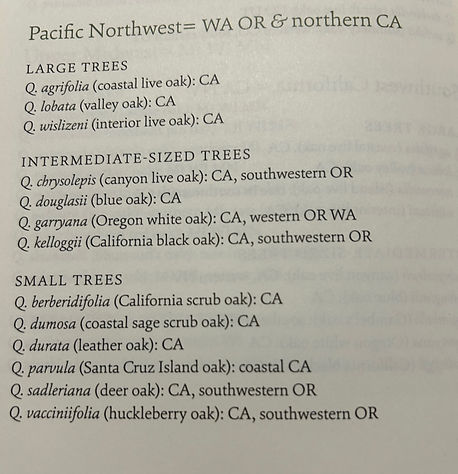
The Nature of Oaks by Douglas Tallamy, 2021


Seasonal Victory Garden Maintenance - presented on Sept. 2024

Part 1
Part 2
Understanding Native Keystone plants - February 2024
Plants are needed all season long for insects and birds. Some good plants that bloom in the Fall are:
-
asters (in groupings of 3-5)
-
goldenrod
-
mountain mint
-
bee balm (monarda)
“Native plants are the most powerful tool in our conservation toolbox; without increasing their use and protection, we will fail in our conservation efforts,” - Dr. Doug Tallamy
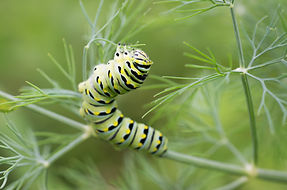

"There is no animal that transfers energy than caterpillars" - Doug Tallamy

Oak trees are essential!

Small Steps for Creating a Native Garden presented on December 2023
-
Avoid using pesticides and talk with friends and neighbors to encourage them to do the same.
-
Order heirloom seeds for your vegetable and flower gardens. Baker Creed Heirloom Seeds has a beautiful catalogue for reference. Note: Place your online order ASAP these popular seeds sell out
-
Plan ahead! Buy native plants from our local Land Trust Plant Sale open this January. Great deals to be had in buying bundles of smaller plants. ( Perhaps order some extra and raise for our own Garden Club plant sale fundraiser!)
-
Read (and share) "Plant First for Nature's Needs!" informative pamphlet by our own club member Fran Brooks.


"Over 500 pages, the 2024 Whole Seed Catalog features our full collection of heirloom varieties from around the world, as well as gorgeous new photographs, recipes, seed histories, stories, and a behind-the-scenes look at the people who make Baker Creek Heirloom Seed Company so special. This item ships domestically from our warehouse within 2 - 5 business days of purchase by bulk mail, with no tracking, and can take 2-5 weeks for delivery. "
*International orders should allow up to 8 weeks for delivery.
Fast & Free shipping. Seed Orders Shipped in 2-5 days from our seed store
Climate Crisis and Restoring local Ecosystems- Sept 11, 2023
National Wildlife Federation, the folks that helped us certify Vashon as a Native Habitat Community, has developed a Native Plant Finder with the assistance of Professor Tallamy. Click on this link to explore it. Enter your zip code and it customizes the list to our area. It even saves plants that interest you for a final list:
http://www.nwf.org/Garden-for-Wildlife/About/Native-Plants/Find-Available-Natives


Audubon has developed a similar resource for selecting plants that benefit specific birds. What birds would you enjoy seeing regularly in your yard?
http://www.audubon.org/native-plants
Two questions motivate me: What can I do personally about the climate crisis?
How can I restore my local ecosystem?
Now those sound like topics for the UN and the national park system and land trusts. But actually, private landowners control the greatest acreage in the US. Through our activities in our garden club, including our plant sale, we can address both these questions.
“Preserving and restoring ecosystems is the foundation to combating climate change.” The biologist Camille Parmesan said that in the first episode of the PBS documentary Evolution Earth. (You can go to PBS online and watch it.) She has worked 40 years studying Edith’s Checkerspot Butterfly. She wrote a Nature article in 1996 that was the first clear demonstration of a species shifting where it lives in response to climate change. Many colleagues ridiculed her because it was such a new revelation. She moved on to a global meta-analysis of 4000 species with the same conclusion. Right now, half of all animals globally are on the move due to climate change. In this country, there are destroyed homes and communities under threat because another natural disaster will wipe them out again.
“Everything we love dearly was borne out of a stable environment. As we destabilize it, the foundations of society reliant on a stable climate start to deteriorate.” (C. Parmesan, Evolution Earth, Episode 1)
So who can guide gardeners in restoring our local ecosystem? Professor Tallamy, especially in his recent book Bringing Nature Home. He’s an entomologist and climate activist.
We can’t use the sun’s energy to power our bodies. We need plants to be able to ‘eat’ sunlight. What creatures are best at transferring that energy? Insects! But most are fussy about what they eat, and especially host plants for a new generation to develop. Caterpillars are loaded with fat and protein. They enable 3-6 young birds to leave the nest in under two weeks.
We need to focus on a productive landscape. Usually we think of that as producing human food or plenty of blooms. Doug Tallamy defines a productive landscape as planting for the largest number of edible insects. Native plants are necessary, because insects have evolved to need them. However, keystone plant species are what the insect world really needs. Keystone species boost caterpillar numbers by 75%.
Here are the keystone species Tallamy cites: Willows (Salix Falicales), Garry Oak or Oregon White Oak (Quercus garryana), the native strawberry (Fragaria vesca), lupine, asters, and sunflowers. (For a fun YouTube video, look at the bloke explaining “Why I Love Wild Strawberries.”)
We can make these keystone species prominent in our home gardens AND available in abundance during our annual plant sale.
Starting this month, here’s what you can do in your yard. Stand in each area of your garden with a notepad and your camera. Take a photo so you remember the plants that will die back to the ground this winter. Begin deciding what to do with plants that have disappointed you or have grown too large. If a plant needs more shade/sun/moisture, do I have a place for it? Make a note of new spot OR that you’re going to pot it for our plant sale.
Is the growth habit unpleasing? Life is too short and our gardening time too valuable to have disappointing plants in our gardens! That disappointment may tickle another gardener who discovers it at our plant sale. Do you have volunteer plants in the wrong place? I dig up dozens of native red twig dogwood since my neighbor has a hedge of them. I try to grow them for two years in their volunteer spots and then pot them in February or March at the latest and place them in my garden club nursery area: close to the house and shaded from the hottest sunlight. If you dig up plants in the fall and pot them, they will need protection from freezing. That’s why I swing into action in late winter.
Once you decide what you’re removing, then decide what to search out for adding to your garden. More plants to feed caterpillars, more berries throughout the season for birds, more self-seeding annuals, more perennials for pollinators.
While the garden rests, you have two well-illustrated online resources to guide you in new plant choices.
National Wildlife Federation, the folks that helped us certify Vashon as a Native Habitat Community, has developed a Native Plant Finder with the assistance of Professor Tallamy. Click on this link to explore it. Enter your zip code and it customizes the list to our area. It even saves plants that interest you for a final list!
http://www.nwf.org/Garden-for-Wildlife/About/Native-Plants/Find-Available-Natives
Audubon has developed a similar resource for selecting plants that benefit specific birds. What birds would you enjoy seeing regularly in your yard?
http://www.audubon.org/native-plants
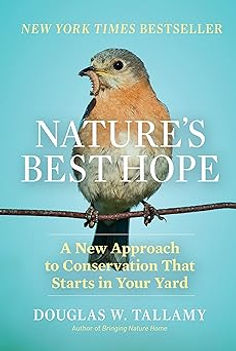
Julia says: "Get your hands on Nature’s Best Hope by Douglas Tallamy. When you’re done, mark a few sections and share with a neighbor who has an immense lawn."
Two native nursery websites with excellent photos and descriptions: (see WebLink below:)
Sparrowhawk Native Plants, Portland, OR
Woodbrook Native Plant Nursery, Gig Harbor
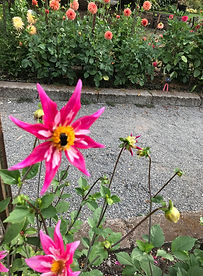
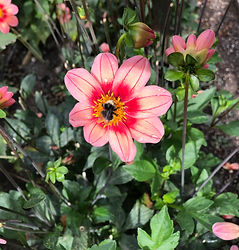
"Dahlias that are more single-flowered with a noticeable array of stamens are very popular with pollinators. These varieties (such as the orchid dahlia) offer open centers, which makes the pollen highly accessible, so they won’t have to go digging for their food."


"Native Plants at the Pollinator Garden Project" presented on 6/12/2023
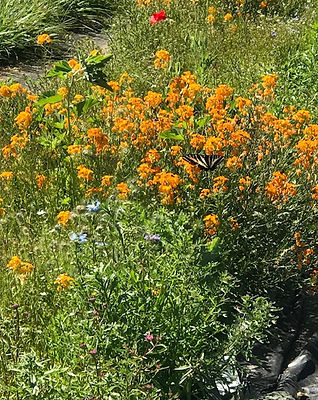
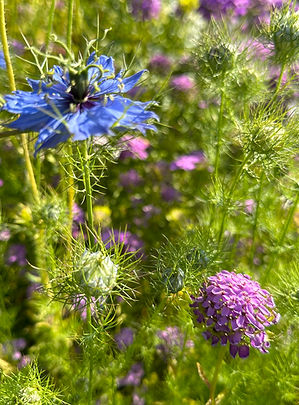

Wallflowers

Love-in-a-Mist
Candytufts and poppy
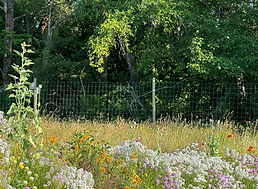

Poppies

Nutka Rose Hedge

Candytufts
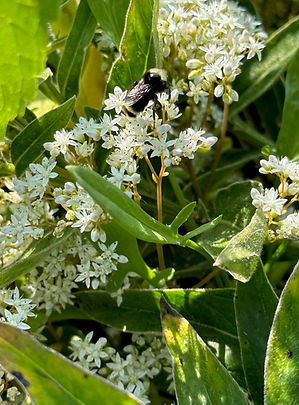
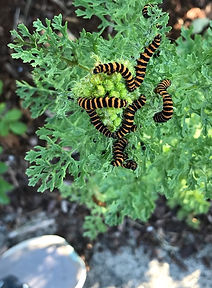

"Interesting Native Plants in the NW - presented by Sue Carper on 3/13/2023
Sue Carper, of Little Bird Gardens, brought three native plant specimens from their nursery and gave an informative summary of each.
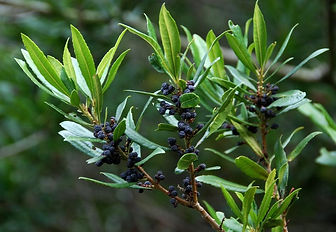

Pacific Wax Myrtle, Myrica Californica
Pacific Wax Myrtle is an evergreen shrub or small tree, and is native to the coasts of California, Oregon and Washington. Pacific Wax Myrtle grows in full sun in coastal areas, and does best in afternoon shade in inland areas. An excellent hedge or screen along the coast as it is very tolerant of wind. Pacific Wax Myrtle transfers nitrogen and water and other nutrients to various other plants in the garden, and reduces the need for additional fertilizer and irrigation. Myrica californica can also be sheared for a more formal-looking hedge, if desired. (Grows to 30' tall by 12'wide).
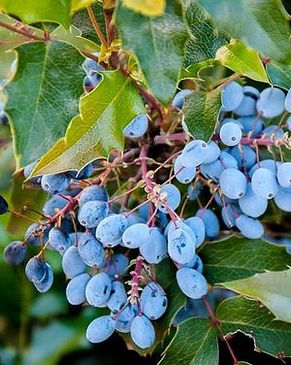
Oregon Grape, Mahonia Aquifolia
Oregon Grape is an evergreen shrub to 6 feet with creeping rhizomes. It's native from N. Calif. to B.C.. It doesn't mind sun or shade is best with regular water but drought tolerant. Oregon Grape has edible berries birds love (they are best used in jelly). Deer will bother only in heavy deer areas.
Mahonia aquifolium tolerates clay and seasonal flooding.
Mahonia aquifolium is great for a bird garden.
Foliage of Mahonia aquifolium has color reddish-green and is evergreen.
Flower of Mahonia aquifolium has color yellow.
Fruit of Mahonia aquifolium is edible.
(grows to 6 to 8' tall, good in sun or shade, good on slopes and deer resistant)
Silk Tassel Bush, Garrya elliptica
Silk Tassel bush is a six foot tall evergreen shrub with very showy male flowers hanging in long white catkins from the end of the branches. Silk-tassel likes full sun, and part sun. Silk Tassel Bush makes a great foundation plant or can be used for an evergreen hedge. Silk Tassel bush is very drought tolerant.
(grows to 12' tall and wide and is deer resistant)
Note:
There is a good mature specimen in the Arboretum Winter Garden)


Washington NWF Habitat Stewards Training Classes
March 2023
The National Wildlife Federation (NWF) is offering a specialized, multi-week online workshop (via Zoom) to connect you with resources to create and restore wildlife habitat in backyards, schoolyards, and in your community.
Learn from local conservation professionals and current NWF Habitat Stewards while participating in this interactive, fun, and highly informative series! Become a Habitat Steward volunteer with National Wildlife Federation and be supported to learn more about your interests and local opportunities.
Learn about:
-
SOIL GARDENING FOR WILDLIFE
-
NOXIOUS WEEDS
-
HABITAT RESTORATION
-
POLLINATORS (BEES) and more
Virtual Trainings will take place from 6pm to 9pm on Tuesdays in March (7th, 14th, 21st, 28th). Optional field opportunites will be posted throughout the months of March and April.
NOTE: You must attend all four online trainings in order to receive your certification. Students/Teachers: Registration is free! All graduates may receive a free pass to the Washington State Fair April 13th to 23rd, 2023 (when they volunteer to work the booth for three hours)
Per Julia:
"A wonderful program with experts each week!"
Dates & Times
March 7th
March 14th
March 21st
March 28th
Tuesday evenings
6pm - 9pm
FEE: $20


Photo credit - Karen Dale
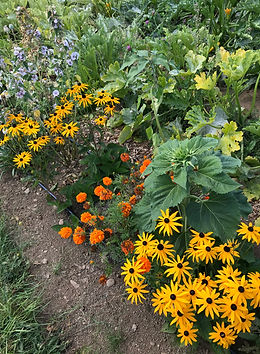
The Pollinator Garden project was a labor of love, created by Julia Lakey in 2019. She enlisted dedicated volunteers to help plant and maintain this garden, who met weekly in the growing season to stay on top of the ever-threatening weeds.
In the ensuring years, this garden became a haven for beneficial insects, which not only helped pollinate Matsuda's many crops, but stood out as well as a 'thing of beauty'.
Thanks to all the folks who helped make this magical garden come to life!
"The Pollinator Garden Project & Collecting Seeds" presented on 10/10/2022

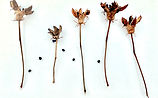
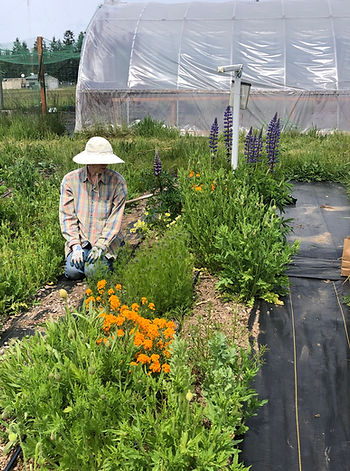
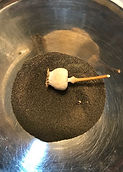
NW Meadowscapes is the premier grower of native NW wildflowers. Order soon and plant in cool fall weather to replicate their favorite growing conditions.
Alpine Strawberries
Create an insect watering station!
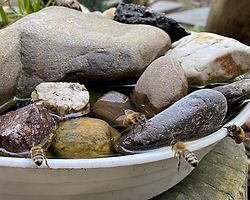
"Woodland (native) Strawberries" presented on 6/13/2022

Alpine strawberries (Fragaria vesca) are a tiny type of strawberry known for their delicious, aromatic wild-strawberry taste. They are flavorful, luxurious, and extremely cute! Unlike their larger grocery-store counterparts, alpine and woodland berries haven’t been bred for size. These little beauties are all about the flavor! Alpine strawberries aren’t exactly a high-production crop, but they certainly are well worth growing in your garden.
"The berries have intense flavor and the leaves can be used in salads" - Julia
Mountain Ash and Red Osier Dogwood presented on 10-11-2021


Julia gives us an update on the development of the Pollinator Garden and the certification of Vashon Island as a National Wildlife Habitat. Vashon is now a Wildlife Habitat Community with the National Wildlife Federation. We now join over 260 communities certified nationwide.
Create your own Pollinator Garden as Julia shares with us the "how to" steps. Click on the botton below for resources and watch the Presentation.



presented on 3/17/2022
"Native Dirt"


Use wood ash as a soil enhancer.

"Soil works for you if you work for the soil."
"Check out my new favorite book!"
- purchased at the Vashon Bookstore.


